
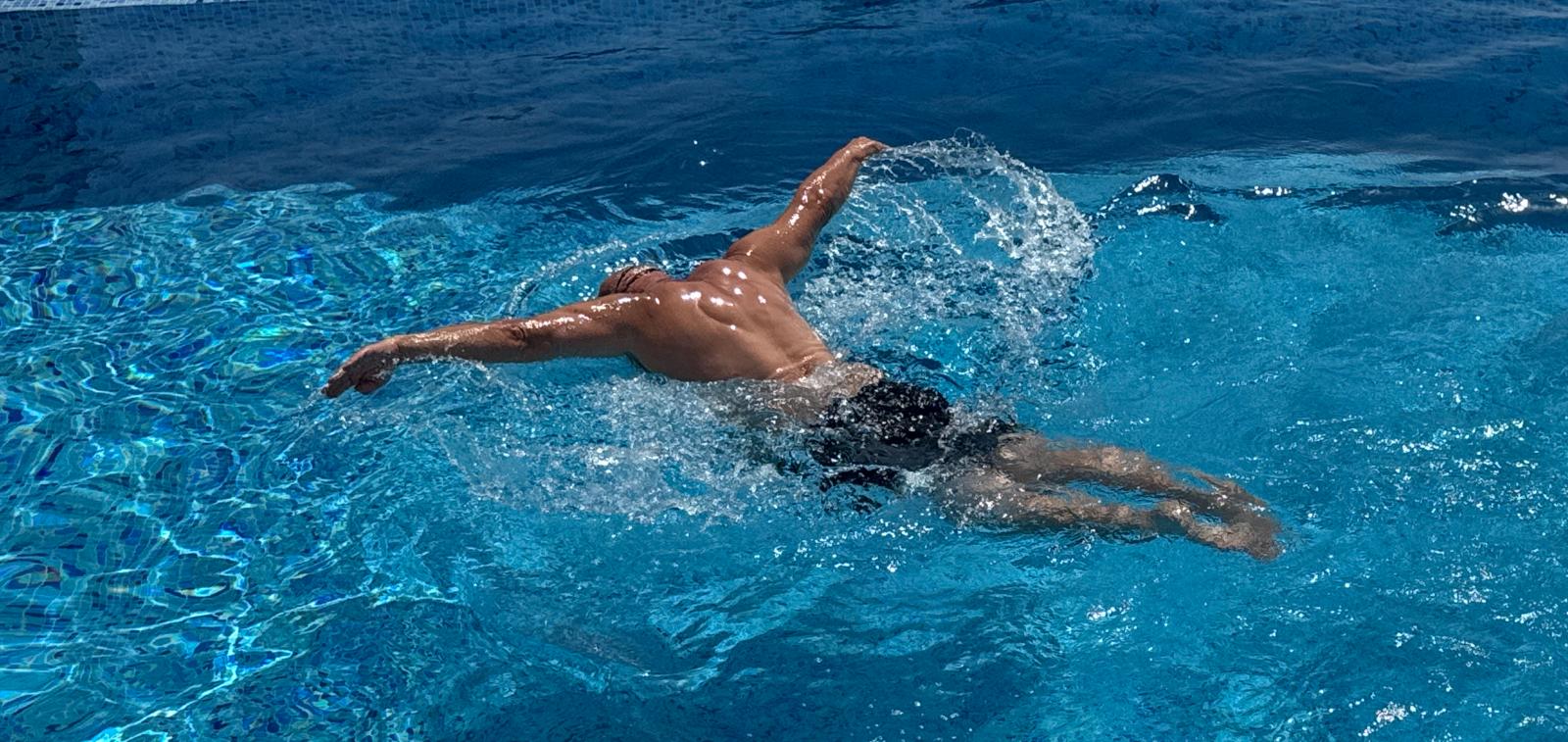
For many swimmers, butterfly is the stroke they assume is no longer for them.
It looks too athletic. Too exhausting. Too demanding on the shoulders and back. Something for young competitive swimmers rather than those of us who simply want to keep moving well and enjoying the water as we get older.
I believe the opposite.
It is never too late to fly.
When butterfly is taught sustainably, it can be one of the most enjoyable, expressive and liberating ways to move through the water.
The problem is not necessarily butterfly itself. It is often the way we have learned to do butterfly.
Too much force.
Too much kicking.
Too much effort to lift the body out of the water.
Too much emphasis on speed and strength.
The Shaw Method approaches butterfly differently.
Rather than trying to overpower the water, we learn to work with it.
We build the stroke progressively in three stages:
The Wave.
The Caterpillar.
Opening the Wings.
Each stage teaches something important about how the whole body can move as one coordinated, flowing system.
Why learn butterfly at all?
As we get older, I believe variety becomes increasingly important.
If we only ever swim one stroke, our body tends to repeat the same patterns again and again.
Butterfly offers something very different.
It introduces a beautiful wave action through the whole body. The spine moves. The chest opens and closes. The shoulders connect into the back. The hips respond. The legs follow the movement rather than simply working independently.
When it is done with ease, butterfly can give us an extraordinary sense of length, mobility, rhythm and freedom.
One of the things I love most about butterfly is the way it mobilises my whole back and spine. It feels as though every part of me is being gently awakened and connected through the movement.
It is also surprisingly meditative.
When the rhythm is right, I become completely absorbed in the wave, the breath and the feeling of moving through the water. There is no room for distraction. I am simply listening, sensing and responding.
You cannot really force a good butterfly. You have to begin sensing when the water is supporting you, when the body wants to travel forward, when the arms can release and when it is time to breathe.
That makes butterfly much more than exercise.
It becomes a practice of coordination, timing and attunement.
And then there is the joy of it.
Butterfly makes me smile. It feels playful, expressive and wonderfully joyful. There is also something satisfying about swimming a stroke that impresses everyone watching, especially when they assume it must be impossibly difficult.
Stage One: Learning the Wave
- The first misconception we address is that butterfly begins with a dolphin kick.
- For me, it doesn’t.
- The wave is a whole-body action.
- It can begin with the movement of the head and travel all the way through the spine, pelvis, knees and feet.
- Later, when the arms are added, you can experience the wave almost from the fingertips right through to the toes.
- The legs are not frantically kicking up and down.
- They are responding to a wave travelling through the body.
- This distinction is enormously important.
- Instead of thinking:
- Kick harder.
- We begin thinking:
- Allow the wave to travel.
- The body becomes longer, softer and more connected.
- You begin discovering that propulsion does not always need to come from muscular effort. It can emerge from coordination.
- This is the foundation of sustainable butterfly.
Stage Two: The Caterpillar
- Once the wave begins to feel natural, we introduce what I call the Caterpillar.
- This is where the relationship between the arms and legs becomes clearer.
- The legs help drive the body forward and down.
- The arms then help bring the body forward and up.
- Down and forward.
- Up and forward.
- Rather than thinking of butterfly as constantly trying to lift ourselves out of the water, we begin to experience a continuous journey forward.
- This changes everything.
- Many swimmers exhaust themselves because they are trying to go up.
- But swimming happens horizontally.
- Our primary direction is forward.
- The Caterpillar teaches us how the wave and the arm action can work together so that the body continues travelling through the water rather than fighting against it.
- There is something wonderfully playful about this stage.
- You begin to feel like a creature moving through the water rather than someone performing a technical swimming stroke.
Stage Three: Opening the Wings
- Then comes one of my favourite moments.
- Opening the wings.
- For many people this is the game changer.
- Traditional butterfly can make the arm recovery look enormous and exhausting. The arms are thrown forward over the water and the shoulders can feel as though they are doing all the work.
- We approach it differently.
- As the hands travel back and pass the hips, we turn the hands over.
- That simple change allows the arms to release naturally into a gentle overarm sweep.
- Instead of hauling the arms forward with the shoulders, the movement begins to connect through the whole back.
- The arms become lighter.
- The chest stays freer.
- The shoulders don’t have to fight.
- Suddenly, something that once felt almost impossible can begin to feel graceful.
- This is why I call it opening the wings.
- There is a moment when you stop doing butterfly and begin to feel as though you are flying across the surface of the water.
- It is one of those moments that makes me smile every time.
Sustainable Butterfly
Sustainable butterfly doesn’t mean swimming length after length until you are exhausted.
You might swim only three or four beautiful cycles.
You might combine a few butterfly movements with breaststroke, backstroke or crawl.
You might spend an entire session exploring the wave without ever swimming a complete length.
There is no prize for suffering.
The question is not:
How much butterfly can I survive?
It is:
How little effort can I use while still experiencing the movement?
That is a very different relationship with the stroke.
And, I believe, a much more sustainable one.
It also leaves space for the qualities I love most: the meditative rhythm, the mobilisation through my back and spine, the feeling of freedom and the sheer joy of moving in a way that makes people stop and look.
Why Butterfly Can Be So Enjoyable
Perhaps the greatest surprise is simply how much fun butterfly can be.
There is something wonderfully expressive about it.
The wave.
The rise and fall.
The opening of the chest.
The sweep of the arms.
The moment your hands turn over beyond your hips and the wings seem to open almost by themselves.
When everything connects, butterfly stops feeling like a battle.
It becomes rhythmic.
- Meditative.
- Playful.
- Sensory.
- Joyful.
It mobilises the whole back and spine.
It makes me smile.
And, I have to admit, it impresses everyone watching.
For older swimmers especially, I think that matters.
We don’t need every visit to the pool to be another training session measured in lengths, times and calories.
We can also use the water to keep exploring movement.
To keep our bodies curious.
To keep discovering new coordination.
To continue doing things we may once have thought were beyond us.
To experience the pleasure of a stroke that feels both deeply inward and wonderfully expressive.
It Is Never Too Late to Fly
I don’t believe ageing should automatically mean making our movement world smaller.
Of course we adapt. We listen more carefully. We respect the body we have today.
But within those boundaries there can still be enormous possibility.
Perhaps at 50, 60, 70 or beyond you will not swim butterfly like an Olympic swimmer.
But you can learn to swim it with grace and ease.
You can discover your butterfly.
A softer butterfly.
A more intelligent butterfly.
A more meditative butterfly.
A butterfly that mobilises your back and spine, makes you smile and brings a sense of joyful freedom to your swimming.
A butterfly based on wave, rhythm, direction and ease rather than strength.
First, learn the wave.
Then become the Caterpillar.
Finally, open the wings.
You may discover that something you thought belonged to younger swimmers can become one of the most pleasurable movements in your swimming practice.
Something that feels expressive, joyful and even a little magical.
It really is never too late to fly